Feeding therapy in Nagpur for calmer, happier mealtimes
Picky eating, gagging, refusing textures or struggling to chew are common and treatable, and they are not the parent's fault. Feeding therapy is our core specialisation.
Qualified, named therapists · 2A Swaroop Nagar, Nagpur · We usually call back within 1 working day during working hours.

When feeding therapy can help
If any of these sound familiar, an assessment is a good first step.
Book an assessment- Eats only a small number of foods (picky or selective eating)
- Stuck on purées, milk or soft foods and unable to move to solids
- Gags, coughs or vomits often during meals
- Has difficulty chewing, biting or moving food in the mouth
- Is very sensitive to textures, smells, colours or temperatures of food
- Mealtimes are long, stressful or end in tears
- Feeding difficulties alongside autism or other developmental needs
What to look out for
A general guide. Every child develops at their own pace, so use it to decide when to ask, not to diagnose.
Not moving on from purées to mashed food by around 9–10 months, gagging on every new texture, or very long feeds.
Eats a very short list of foods, refuses whole food groups, keeps food in the mouth without chewing, or still needs everything blended.
Panics or gags when a new food is on the plate, drops foods from the list and does not add new ones, or meals regularly take more than 30–40 minutes.
Avoids eating with others, carries only "safe" foods, or worries about choking or the feel of food.
How it works at SPOT
Feeding assessment
We take a detailed history and look at oral-motor skills, sensory responses and mealtime behaviour. You may be asked to bring foods your child eats and refuses.
A step-by-step plan
Small, achievable goals, such as accepting a new texture, touching a new food, or chewing safely, built at your child's pace.
Therapy sessions
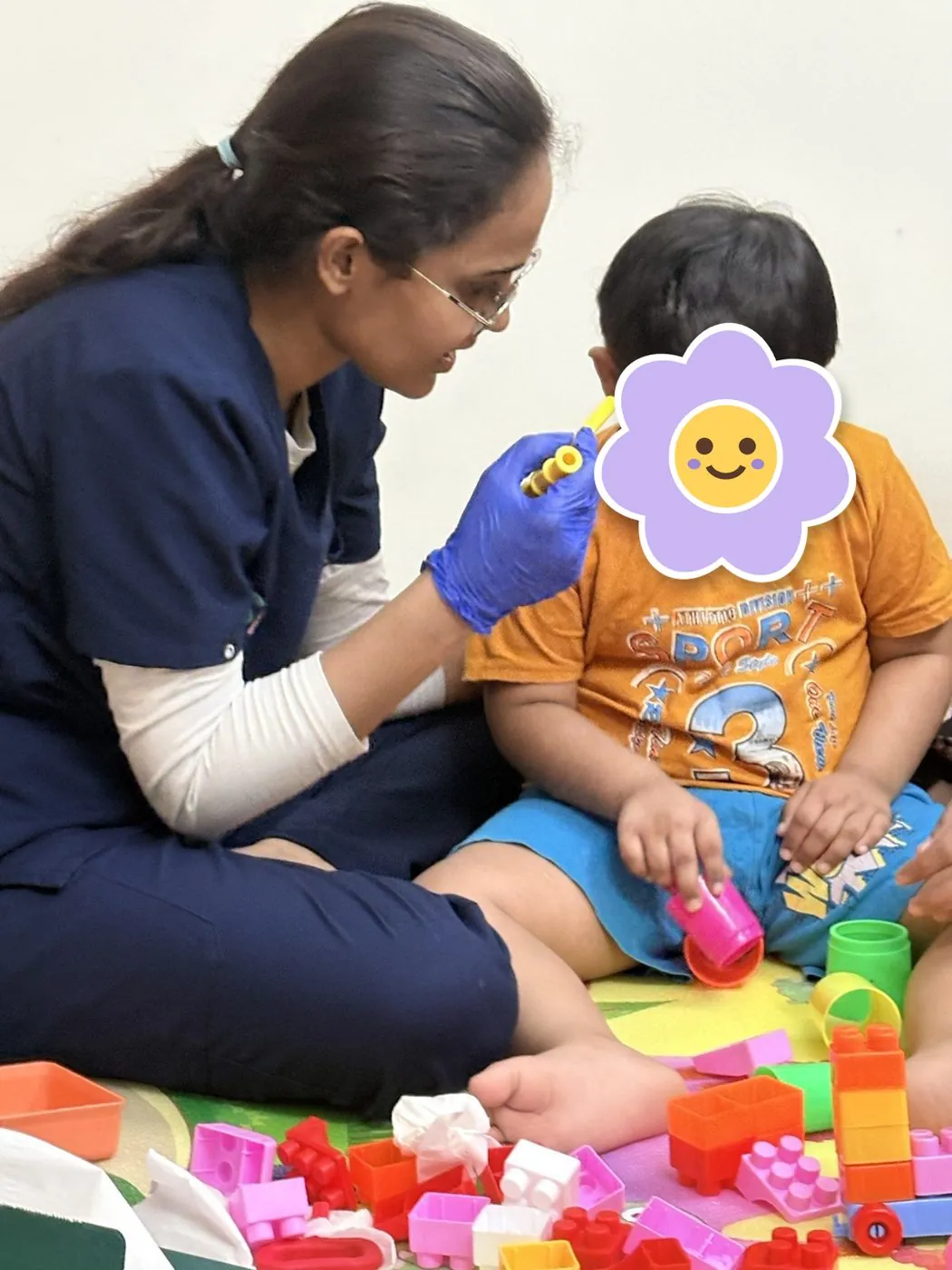
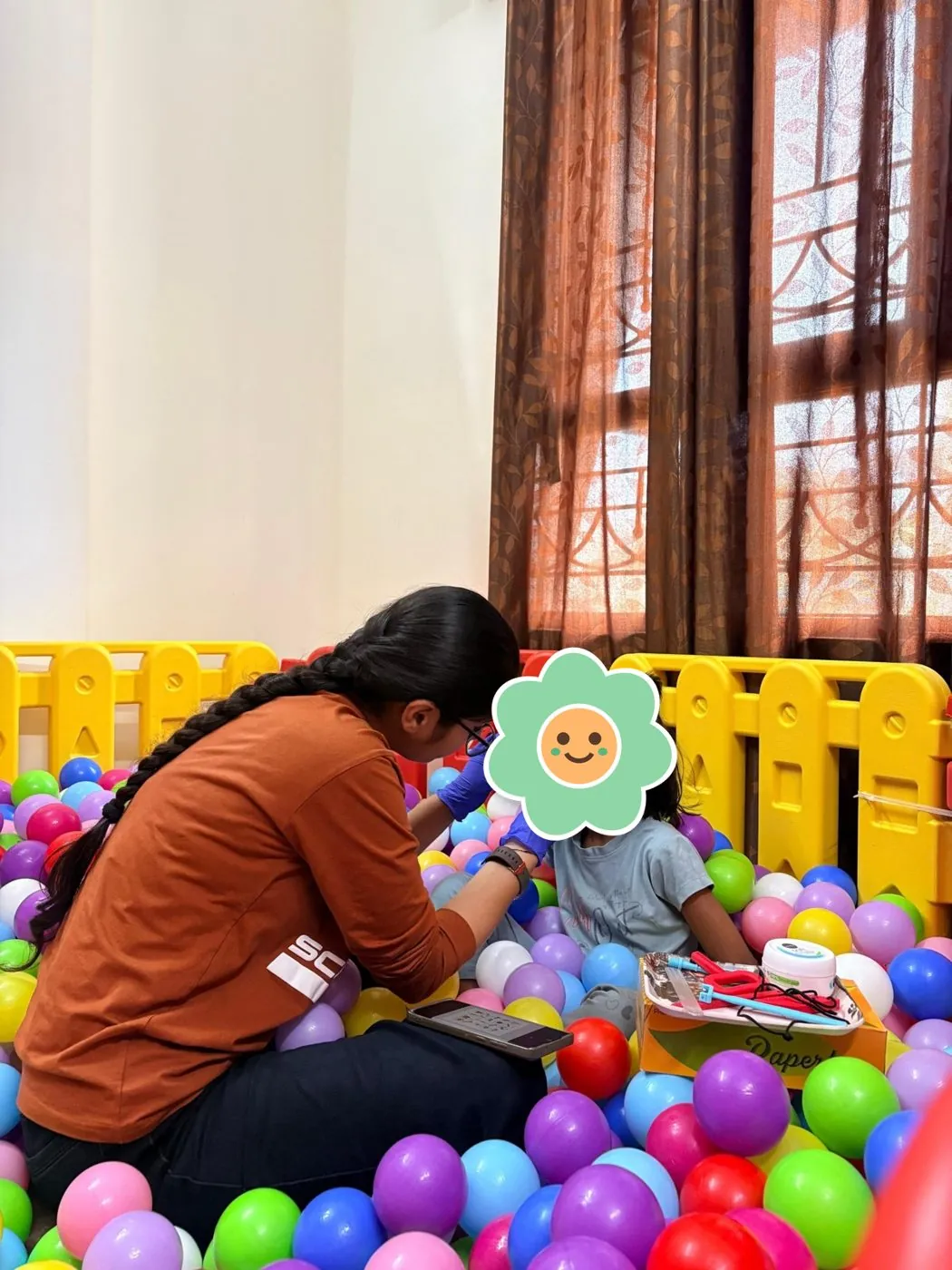
Play-based sessions that make new foods feel safe, with oral-motor work where needed.
Mealtime coaching for parents
Clear guidance on what to do, and what to avoid, at meals at home, so progress continues every day.
Led by Monika Pilania, Clinical Director and certified feeding therapist.
Meet the team →What happens in the first assessment
You will leave with a clear picture of what is happening and what to do next.
Book an assessment- Before you come: we ask a few questions on the phone and fix a time. Bring two or three foods your child eats and one or two they refuse, any reports, and a short phone video of a normal meal if possible.
- During the assessment: the therapist takes a detailed history, then observes and plays with your child. For feeding, we look at chewing, biting, tongue and lip movement, how your child reacts to different textures, and how a typical meal goes.
- After the assessment: we explain what we found in simple language, suggest whether therapy is needed, and give you one or two things to start at home straight away.
- How long it takes: usually 1 to 2 hours, depending on your child's needs. You stay with your child throughout.
What parents can do at home
Therapy works best when it continues in daily life. Your therapist will tailor these ideas to your child.
Read: My child eats only a few foods. When should I worry? →- Offer one small portion of a new food next to familiar foods, without asking your child to eat it.
- Eat together at the table, with screens off, as often as you can.
- Let your child touch, smell, lick or play with new foods. Exploring counts as progress.
- Keep a predictable routine of meals and snacks, and avoid grazing in between.
- Praise trying, not the amount eaten. Avoid bribes, pressure and hiding food.
- Practise the exact steps your therapist shows you, for a few minutes, most days.
Your therapists

Clinically reviewed by Monika Pilania, BASLP (AIISH, Mysore), Clinical Director
Common questions
My child is just a fussy eater. Do they need therapy?
Many children go through fussy phases. It is worth an assessment if the list of accepted foods is very short, weight or growth is a concern, meals regularly cause distress, or your child gags or struggles to chew.
Will you force my child to eat?
No. Forcing usually makes feeding harder. We build comfort with food step by step, so your child learns to eat more without fear.
Should I also see a doctor?
If there are concerns about weight, growth, choking or medical conditions, your paediatrician should be involved. We are happy to coordinate with your doctor.
How many sessions will my child need?
It depends on the cause and how often you can practise at home. After the assessment we set short-term goals and review them with you, rather than promising a fixed number of sessions.
Do you work with children who have autism and feeding difficulties?
Yes. Many autistic children have strong food preferences or sensory sensitivities. We adapt the pace and work closely with parents and, where needed, the OT team.
Can feeding therapy help adults?
Please call us to discuss. Swallowing problems after a stroke or illness need medical assessment first, and we can guide you on the right next step.
Support that works together

Speech-language therapy
Misarticulation, late talking, stuttering, cleft palate speech, and speech after a stroke.
Learn more →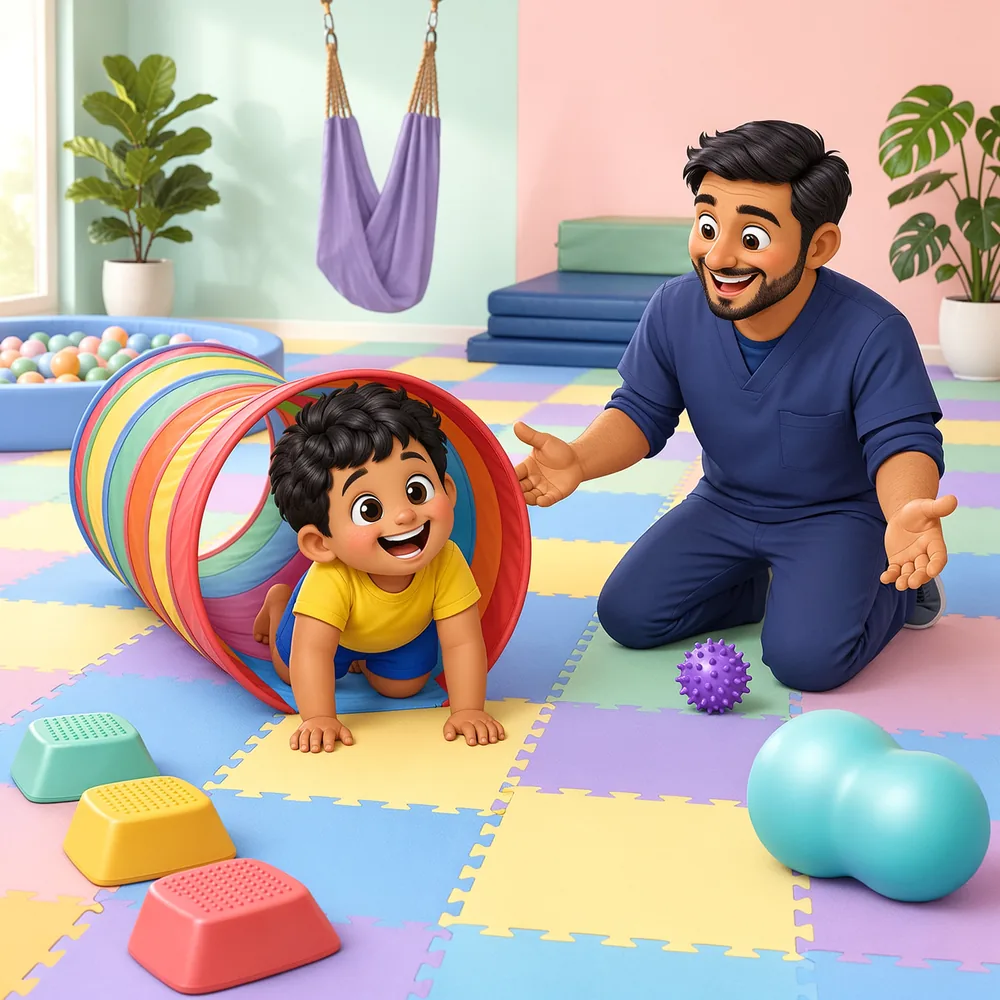
Sensory integration therapy
For children who are over- or under-sensitive to sound, touch or movement.
Learn more →
Autism support
Communication, play, daily-living and learning support, planned together.
Learn more →Not sure where to start?
Tell us what you have noticed. We will listen, and guide you to the right first step.