Speech-language therapy in Nagpur that helps every voice be heard
For children and adults who find it hard to speak, understand, or communicate clearly.
Qualified, named therapists · 2A Swaroop Nagar, Nagpur · We usually call back within 1 working day during working hours.

Speech-language therapy for kids & adults
If any of these sound familiar, an assessment is a good first step.
Speech-language therapy for children
- Misarticulation (unclear speech sounds)
- Late talking and language delay
- Stuttering (stammering)
- Speech after cleft lip and palate
- Communication support in autism
- Hearing loss and auditory-verbal therapy
- Voice difficulties

Speech-language therapy for adults
- Speech and language after a stroke (aphasia)
- Speech difficulties after brain injury or illness
- Stuttering (stammering)
- Misarticulation (unclear speech sounds)
- Cleft palate speech
- Voice difficulties
What to look out for
A general guide. Every child develops at their own pace, so use it to decide when to ask, not to diagnose.
Not babbling, not pointing, or not responding to their name or to familiar sounds.
Not using any single words, or not understanding simple instructions like "give me".
Fewer than about 50 words, or not joining two words together ("more milk", "papa come").
Family and strangers find speech hard to understand, sentences are very short, or the child stammers or gets frustrated.
Difficulty speaking, finding words or understanding after a stroke or illness, a voice that tires easily, or long-standing stammering.
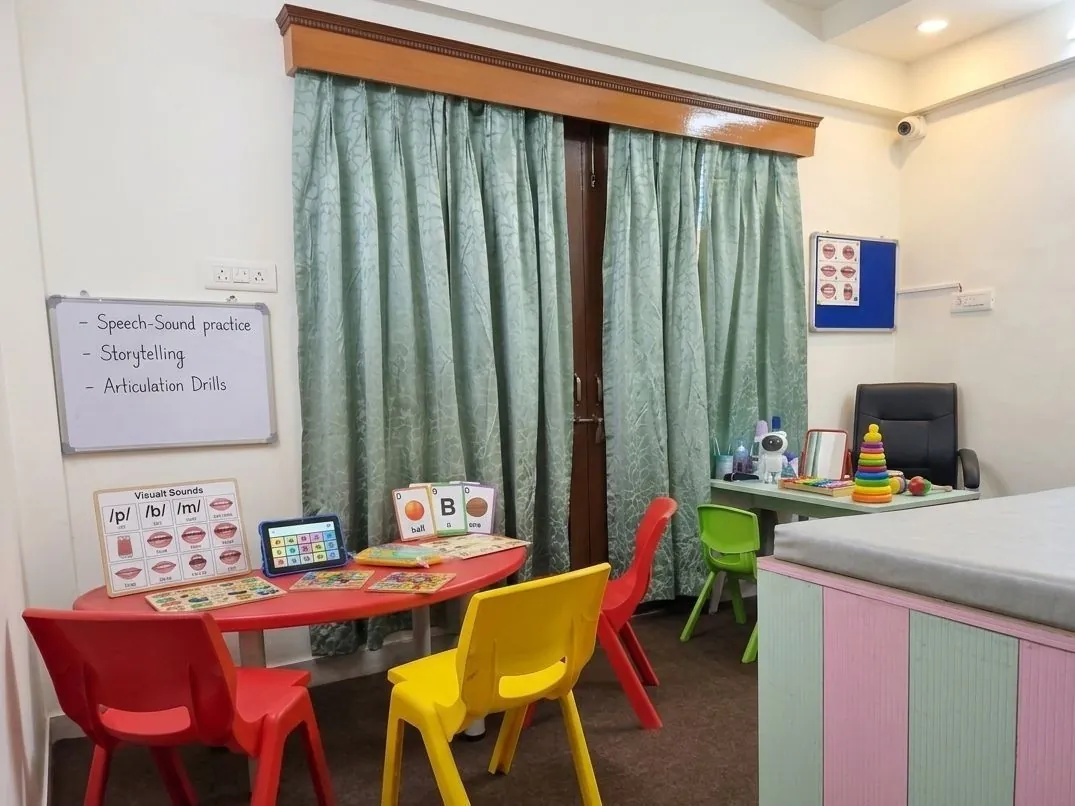
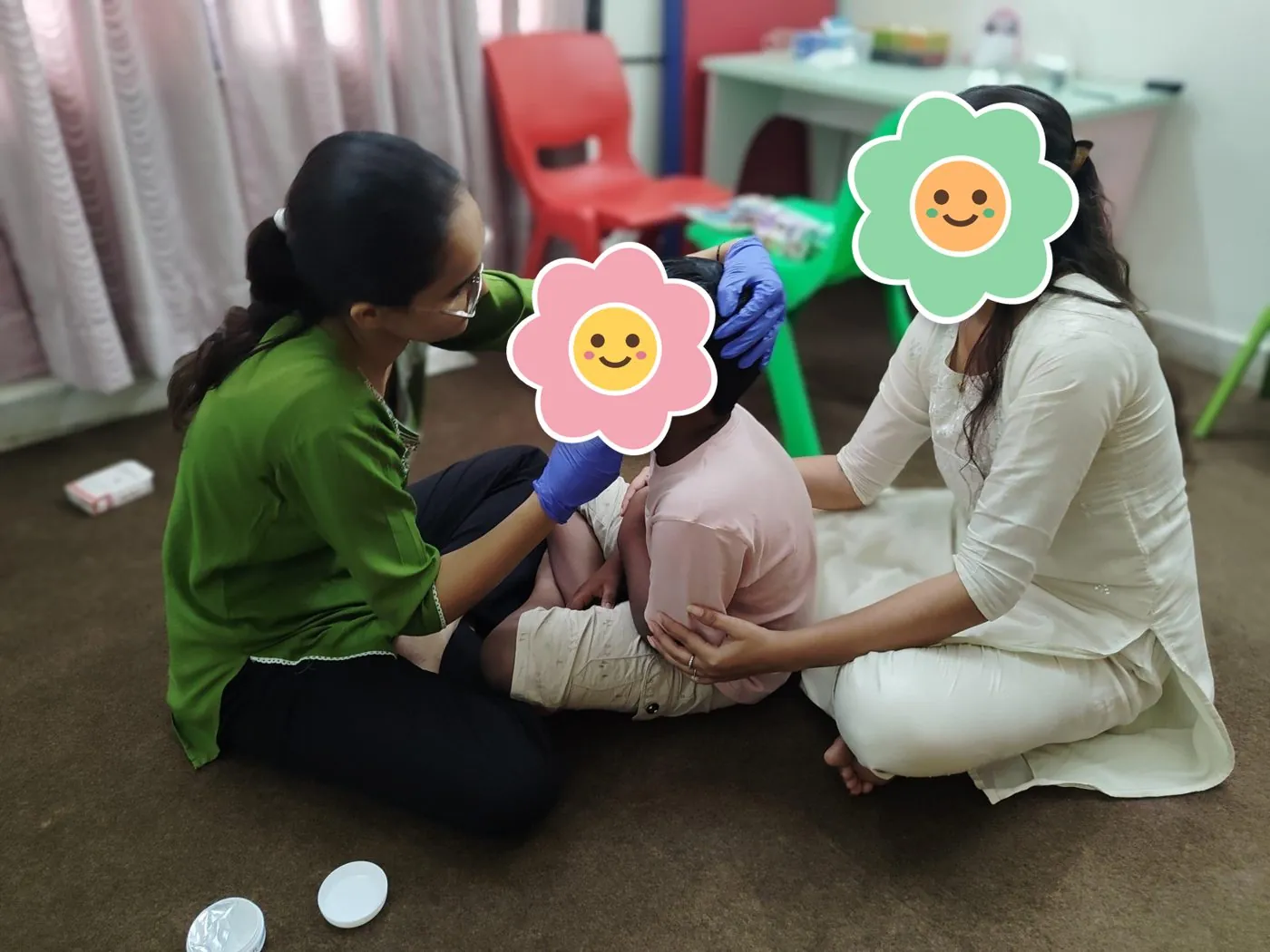
How it works at SPOT
Speech and language assessment
We assess understanding, expression, speech sounds, fluency and voice, and explain the findings to you simply.
Individual goals
Clear, measurable goals that matter in daily life, like asking for help, being understood by others, or speaking fluently.
Play-based sessions
Engaging 45-minute sessions designed around your child's interests.
Home practice
Simple activities you can do during daily routines, because practice at home makes the biggest difference.
Our speech-language team: Monika Pilania and Gagandeep.
Meet the team →What happens in the first assessment
You will leave with a clear picture of what is happening and what to do next.
Book an assessment- Before you come: we ask a few questions on the phone and fix a time. Bring any hearing, medical or school reports, and a list of words or sentences your child uses at home.
- During the assessment: the therapist takes a detailed history, then observes and plays with your child. We check understanding, spoken language, speech sounds, fluency and voice, and we may suggest a hearing test if one has not been done.
- After the assessment: we explain what we found in simple language, suggest whether therapy is needed, and give you one or two things to start at home straight away.
- How long it takes: usually 1 to 2 hours, depending on your child's needs. You stay with your child throughout.
What parents can do at home
Therapy works best when it continues in daily life. Your therapist will tailor these ideas to your child.
Read: When should a child start talking? →- Talk about what you are doing during daily routines: bathing, cooking, dressing.
- Get down to your child's level, follow their interest, and wait a few seconds for them to respond.
- Repeat and gently expand what your child says ("car" → "red car").
- Read picture books together every day and name what you see.
- Keep screen time low, especially under 2 years, and talk instead of using the screen.
- Use your home language freely. Speaking more than one language does not cause speech delay.
Your therapists

Clinically reviewed by Monika Pilania, BASLP (AIISH, Mysore), Clinical Director
Common questions
At what age should my child be talking?
Children develop at different rates, but if your child is not babbling by around 12 months, not using single words by around 18 months, or not joining words by around 2 years, an assessment is a good idea.
Can stuttering be treated in adults?
Yes. Adults who stutter can learn techniques to speak more fluently and confidently. Therapy also addresses the anxiety that often comes with stuttering.
Will speech therapy help with autism?
Speech-language therapy can support communication, understanding and social interaction for many autistic children, as part of a wider plan.
Does using two or three languages at home delay speech?
No. Children can learn more than one language. If there is a delay, it usually shows in all the languages, and the assessment will tell you more.
Should I get my child's hearing tested?
If your child is late to talk or does not respond well to sounds, a hearing check is a sensible first step. We can tell you where to get one done.
Do you see children with cleft lip and palate?
Yes. We work on speech sounds and voice after cleft repair, and coordinate with the surgical team where possible.
Support that works together

Feeding therapy
Picky eating, textures, chewing and stressful mealtimes. Our core specialisation.
Learn more →
Stuttering therapy
Stammering in children and adults: easier, more confident talking.
Learn more →
Autism support
Communication, play, daily-living and learning support, planned together.
Learn more →Not sure where to start?
Tell us what you have noticed. We will listen, and guide you to the right first step.