Special education in Nagpur that fits the way your child learns
Individual learning support for children who need a different way of learning, at home and in school.
Qualified, named therapists · 2A Swaroop Nagar, Nagpur · We usually call back within 1 working day during working hours.

When special education can help
If any of these sound familiar, an assessment is a good first step.
Book an assessment- Learning difficulties, including dyslexia, dysgraphia and dyscalculia
- Difficulty with reading, writing, spelling or maths
- Attention difficulties, including ADHD
- School readiness for young children
- Behaviour that gets in the way of learning (behaviour therapy)
- Children who need an individual education plan (IEP)
What to look out for
A general guide. Every child develops at their own pace, so use it to decide when to ask, not to diagnose.
Difficulty learning colours, shapes or letters, following simple routines, or sitting for short activities.
Slow reading, reversing letters long after classmates, trouble with spelling or basic number work.
Avoids reading, written work does not match spoken ability, struggles with maths, organisation or attention.
Falling behind despite effort, exam stress, low confidence, or behaviour that gets in the way of learning.
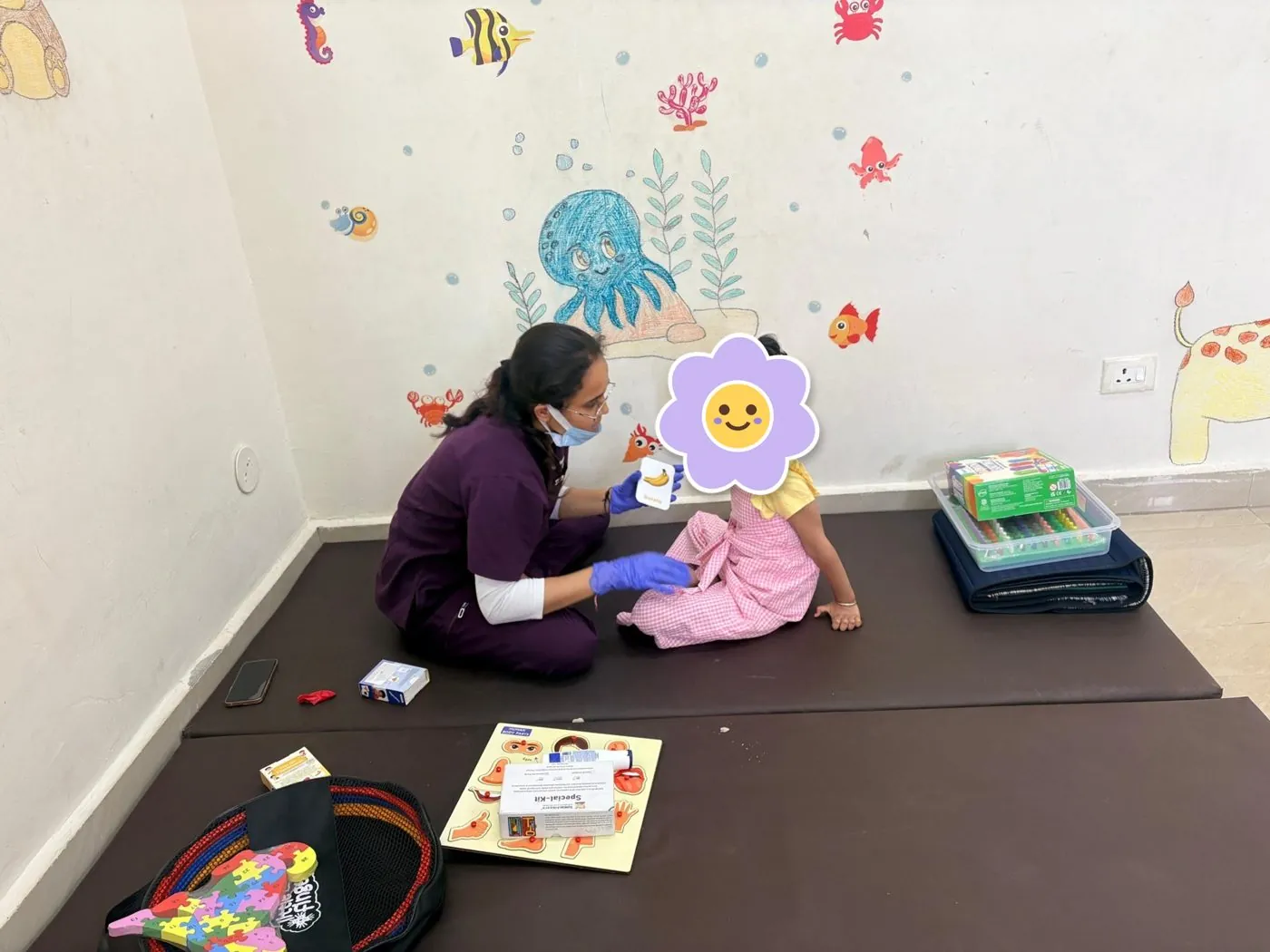
How it works at SPOT
Learning assessment
We understand how your child learns, where they are struggling, and what they are already good at.
Individual education plan
Clear academic and behaviour goals, matched to your child's level and school needs.
Teaching sessions
Structured, multi-sensory teaching that builds skills and confidence step by step.
Parent and school guidance
Strategies for homework and, with your permission, suggestions for the class teacher.
Our special educators: Vandana Harsulkar and Surbhi Gupta.
Meet the team →What happens in the first assessment
You will leave with a clear picture of what is happening and what to do next.
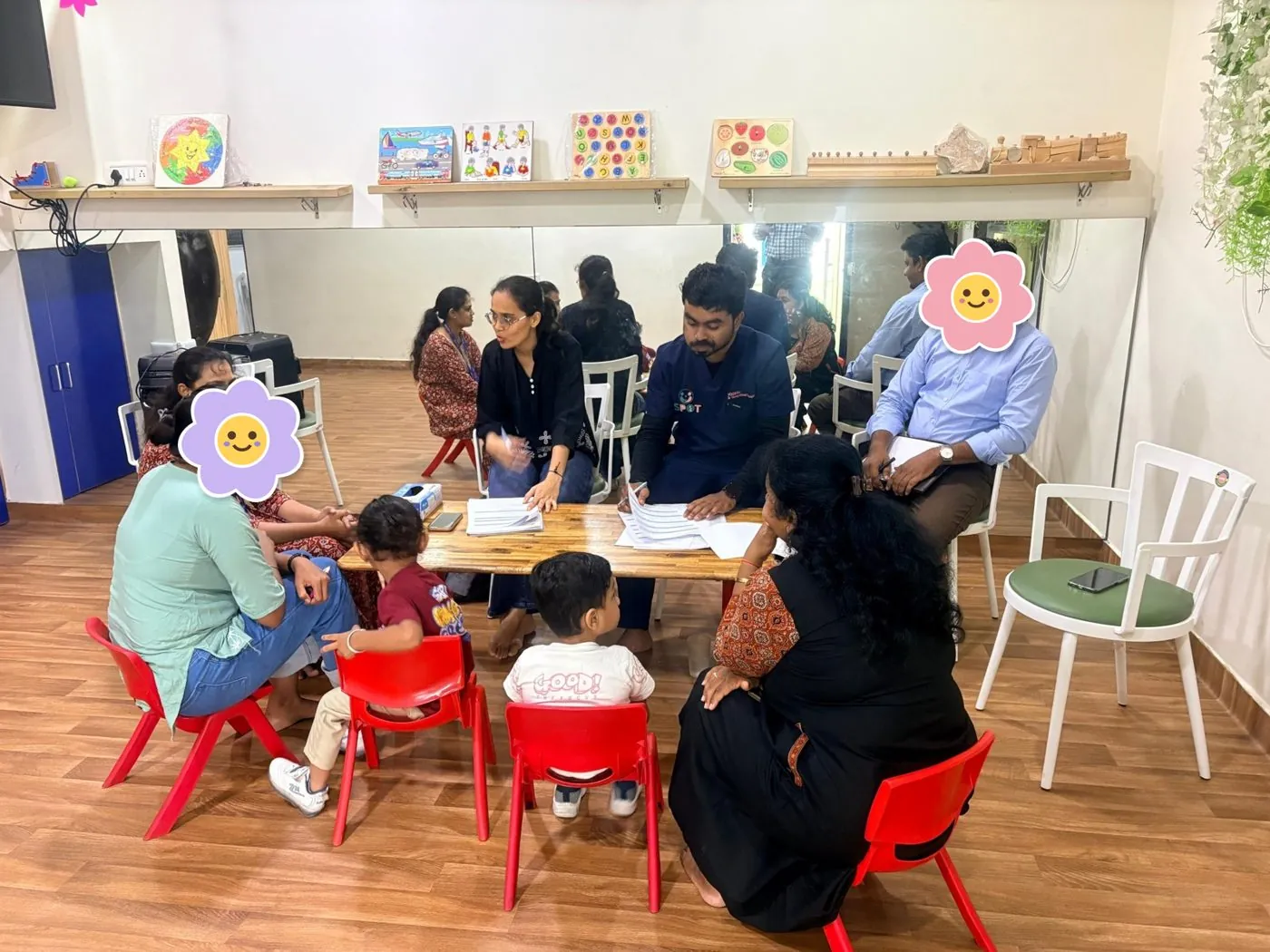
Book an assessment- Before you come: we ask a few questions on the phone and fix a time. Bring school reports, recent notebooks and any previous assessments.
- During the assessment: the therapist takes a detailed history, then observes and plays with your child. We look at reading, writing, spelling, number skills, attention and how your child approaches a task.
- After the assessment: we explain what we found in simple language, suggest whether therapy is needed, and give you one or two things to start at home straight away.
- How long it takes: usually 1 to 2 hours, depending on your child's needs. You stay with your child throughout.
What parents can do at home
Therapy works best when it continues in daily life. Your therapist will tailor these ideas to your child.
Read: Signs worth getting checked (Parents' corner) →- Short, regular practice is better than long sessions: 10–15 minutes a day.
- Read together, and talk about the story, not only the words.
- Break homework into small steps and use a simple checklist.
- Praise effort and progress, not only marks.
- Keep in touch with the class teacher, and share the strategies we suggest.
Your therapists
Clinically reviewed by Monika Pilania, BASLP (AIISH, Mysore), Clinical Director
Common questions
How do I know if my child has a learning difficulty?
Signs include ongoing trouble with reading, spelling, writing or maths despite effort, or a big gap between how bright your child seems and their school results. An assessment gives clarity.
Can you work with my child's school?
With your permission, we can share strategies and discuss support with the school.
Is special education only for children with a diagnosis?
No. Any child who is struggling to learn in the usual way can benefit from individual support.
Do you give a certificate for dyslexia or learning disability?
Formal certification is usually done through approved government or hospital centres. We assess learning needs, plan support, and can guide you on the certification process.
Can you help with board exam accommodations?
We can explain the process and support you with the information schools usually ask for. Final decisions are made by the board and the school.
Do you offer behaviour therapy?
Yes. Behaviour support is part of our special education work. We look at what triggers the behaviour and teach new skills, with parents involved at every step.
Support that works together

Occupational therapy
Sensory, motor and handwriting skills for children; rehabilitation and daily living skills for adults.
Learn more →
Autism support
Communication, play, daily-living and learning support, planned together.
Learn more →
Psychological counselling
Emotional and behavioural support for students, adults and families.
Learn more →Not sure where to start?
Tell us what you have noticed. We will listen, and guide you to the right first step.